
Home > Doula Profile: Marchel Shipman
Doula Profile: Marchel Shipman
Marchel Shipman has lived a jack-of-all-trades kind of life. She was born in California and raised mostly in Ohio, then attended a couple of universities and received a master of fine arts from Southern Methodist University and settled in Chicago for a life of acting and teaching for many years. After “sweet Amalia and rascal Jack” were born, Marchel and her husband gave all that up and started afresh in Berlin. There, she has written (including winning a writing award), edited, managed a charity benefiting kids with cancer, and “done a multitude of this and that.” With the kids no longer kids, Marchel, her husband, and their dogs have moved to Falkensee, which borders Berlin. Marchel recently completed her INELDA training; distance, COVID-19, and personal time off made it a lengthy process. During that time, she also earned a certificate in Germany as a Sterbebegleiterin, which is similar to an EOL doula—just with a German spin.
She shared her story with us in both English and German.
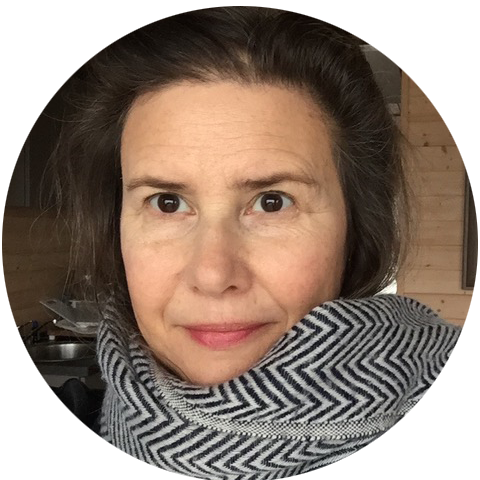
Q&A with Marchel
When and why did you decide to become an end-of-life doula?
In 2019 I was washing the dishes in my kitchen, listening to a radio program on NPR about end-of-life doulas. I had never heard of such a thing; it made so much sense. The room went absolutely, completely still; time itself seemed to slow. I just kind of knew I was meant to be doing that.
Im Jahr 2019 spülte ich in meiner Küche das Geschirr ab und hörte eine Radiosendung auf NPR über Doulas am Lebensende. Ich hatte noch nie von so etwas gehört, das machte so viel Sinn. Der Raum wurde absolut still, die Zeit schien sich zu verlangsamen. Ich wusste einfach, dass ich das tun sollte.
What is your pathway to practicing as a doula?
I live in Germany, and it was challenging for me to accumulate hours working with the dying in order to get my certification. There is a volunteer position here called Sterbebegleiterin, which is similar to an end-of-life doula. The people at the hospice who were certifying people as Sterbebegleiterins told me that if I took their course, I could work with the dying and submit those hours, which INELDA agreed to as well. After my classes and certificate, I was offered a place at the hospice in Wannsee, Germany. So currently what I do is meet people at the hospice, and where there seems to be a bond, I work more closely with them.
Ich lebe in Deutschland und es war eine Herausforderung für mich, genug Stunden in der Arbeit mit Sterbenden zusammen zu bekommen, um mein EoLD-Zertifikat zu erhalten. Es gibt hier ein Ehrenamt, das Sterbebegleiterin heißt, was einer End of Life Doula ähnelt. Die Leute im Hospiz, die Menschen als Sterbebegleiterinnen zertifizieren, sagten mir, dass ich mit Sterbenden arbeiten und diese Stunden einreichen könnte, wenn ich ihren Kurs belegte, was INELDA auch befürwortete. Nach meinem Kurs und meinem Zertifikat wurde mir ein Platz im Hospiz in Berlin/Wannsee angeboten. Zurzeit treffe ich mich also mit Menschen im Hospiz, und wenn sich eine Verbindung ergibt, arbeite ich enger mit ihnen zusammen.
What type of environment do you work in?
I work directly in a hospice, and sometimes the hospice will also send me to work with people in their homes.
Ich arbeite direkt in einem Hospiz und manchmal schickt mich das Hospiz auch zu den Menschen nach Hause.
What do you do before you meet with a new client?
Hmmm … well, that is kind of personal and would certainly have me looking like a kook or a hippie or something. 🙂 What I will say is that I meditate, clear my head, and ask for guidance. Every. Single. Time. It is super important for me to be there for what the person needs and let my own needs fall away.
Hmmm… nun, das ist ziemlich persönlich und wird mich wie ein Hippie oder so aussehen lassen. Was ich sagen kann, ist, dass ich meditiere, meinen Kopf frei mache und um Anleitung bitte. Jedes Mal. Es ist superwichtig für mich, für die Bedürfnisse der Person da zu sein und meine eigenen Bedürfnisse zurückzustellen.
Can you share a short anecdote or insight that changed you?
I was working with a man I grew very fond of. We had an easy rapport—had a kind of flow. Towards the end he lingered. He lingered and lingered and withered and melted and shrunk, but he did not die. This went on for some time, maybe a week. Every day I thought: Surely he cannot make it through the night. Every day the hospice nurses said: Surely he cannot make it through the night … but then he did. The suffering of his partner was extraordinary, just brutal. She would leave the room and we would chat in the corridor about nothing, but that time was important for her to right the ship, so to speak, so that she could go back into the room. I talked with him, though he’d long stopped responding. I told him he could go, release, let go—all the things one might say. But he didn’t.
The suffering seemed cruel. I hoped for his suffering to end, prayed that he might pass, stopped short of begging him. He finally passed just as the New Year’s fireworks split the skies with their bam, bam, bam. I was so thankful. I meditated on this for some time, and what I realized in meditation was that it was not my place to wish or pray for his journey to be anything other than what it was. That was his journey, his ride, his life, and his death was his—and though I might be there to help, to bear witness, I was certainly not there to make it anything other than what it was. I learned to be at peace no matter what was happening in the room. That was a really, really important lesson for me. I have walked with that lesson firmly in place in every future room I’ve entered.
Ich arbeitete mit einem Mann zusammen, der mir sehr ans Herz gewachsen war. Wir hatten ein sehr gutes Verhältnis zueinander. Zum Ende hin verweilte er. Er verweilte und verweilte, verwelkte und schmolz und schrumpfte, aber er starb nicht. Das ging einige Zeit so, vielleicht eine Woche. Jeden Tag dachte ich: Er wird die Nacht wohl nicht überleben. Jeden Tag sagten die Hospizschwestern: Er schafft es sicher nicht durch die Nacht… aber dann schaffte er es doch. Das Leiden seiner Partnerin war außergewöhnlich, einfach brutal. Sie verließ das Zimmer und wir unterhielten uns auf dem Flur über nichts, aber diese Zeit war wichtig für sie, um sich zu fangen, damit sie wieder in das Zimmer gehen konnte. Ich redete mit ihm, obwohl er schon lange nicht mehr reagierte. Ich sagte ihm, er könne gehen, loslassen, loslassen – all die Dinge, die man sagen kann. Aber er tat es nicht. Das Leiden schien grausam. Ich hoffte, dass sein Leiden ein Ende haben würde, betete, dass er gehen möge, hielt mich aber zurück, ihn anzuflehen. Schließlich verschied er, als das Neujahrsfeuerwerk den Himmel mit seinem lauten Knallen zerteilte. Ich war so dankbar. Ich habe eine Weile darüber nachgedacht, und in der Meditation wurde mir klar, dass es mir nicht zustand, mir zu wünschen oder dafür zu beten, dass seine Reise anders verlaufen möge, als sie es tat. Es war seine Reise, seine Fahrt, sein Leben und sein Tod, und obwohl ich vielleicht da war, um zu helfen, um Zeuge zu sein, war ich sicherlich nicht da, um etwas anderes daraus zu machen. Ich lernte, in Frieden zu leben, ganz gleich, was im Raum geschah. Das war eine sehr, sehr wichtige Lektion für mich. Ich habe diese Lektion fest verinnerlicht.
Who has been one of your teachers or mentors?
Oh, mine is not a fresh take. I would say what every EOLD would say, I expect. Every single client has been the greatest of teachers. They all teach such important lessons. I will add a shout-out to my INELDA mentor, Shelby, who walked with me through the initial experiences. She sure did help me clarify.
Ich würde sagen, was jeder EoLD sagen würde, denke ich. Jeder einzelne Gast war der beste Lehrer. Sie alle bringen einem wichtige Lektionen bei. Ich möchte auch meiner INELDA-Mentorin Shelby ein Lob aussprechen, die mich durch die ersten Erfahrungen begleitet hat. Sie hat mir wirklich geholfen, Klarheit zu schaffen.
What do you wish you had known when you started as a doula?
The smell. I wish someone had told me about the smell. The smell in the hospice is a certain combination that can be really hard to shake.
I also wish I had understood better just how truly unprepared people are in general to come to terms with the end of this life. It is really striking. Our culture has not prepared us. I see this all the time. It can be a real challenge.
Den Geruch. Ich wünschte, jemand hätte mir etwas über den Geruch gesagt. Der Geruch im Hospiz ist eine bestimmte Kombination, der man sich nur schwer entziehen kann.
Ich wünschte auch, ich hätte besser verstanden, wie unvorbereitet die Menschen im Allgemeinen auf das Ende ihres Lebens sind. Es ist wirklich erstaunlich. Unsere Kultur hat uns nicht darauf vorbereitet. Ich sehe das immer wieder. Das kann eine echte Herausforderung sein.
Do you have any words of encouragement for fellow doulas?
What a blessing it is that your clients have you. Trust yourself. It’s the greatest gift you can give yourself and others.
Es ist ein Segen, dass Ihre Gäste Sie haben. Vertrauen Sie sich selbst. Das ist das größte Geschenk, das Sie sich und anderen machen können.
What is your dream for your practice or doulas in general?
Oh, I’d really like to work more as an end-of-life doula and less as a German Sterbebegleiterin, which is much more functional than an EOLD, more steeped in the functional. I’d like to open up the world of the EOLD in a way that currently my German culture does not support. I have such dreams of bringing this important work to people here in Berlin and Brandenburg.
Oh, ich würde wirklich gerne mehr als End of Life Doula arbeiten und weniger als deutsche Sterbebegleiterin, die viel funktionaler ist als eine EoLD, mehr im Funktionalen verankert. Ich würde gerne die Welt der EoLD auf eine Art und Weise öffnen, die meine deutsche Kultur derzeit nicht unterstützt. Mein Traum ist, diese wichtige Arbeit den Menschen hier in Berlin und Brandenburg näher zu bringen.
Posted 10/7/2025