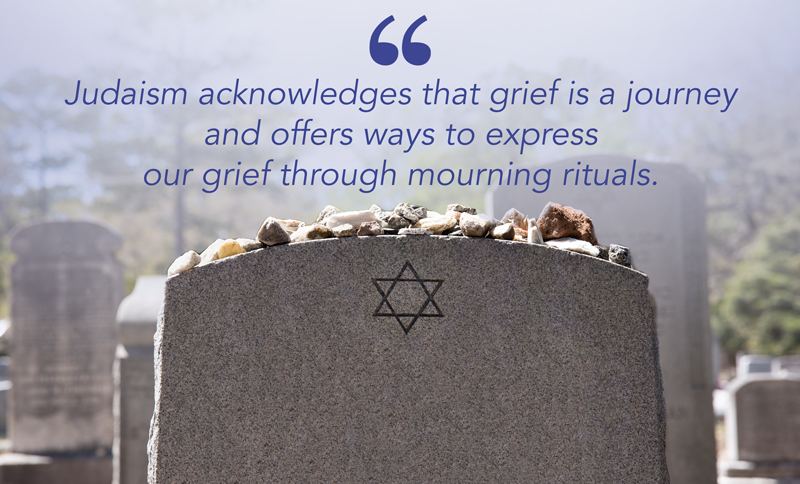

Rituals allow us to bring to light our values and our relationships so that we may deepen these connections and share their importance. Judaism, like many other religions, is full of rituals that mark time and transition; specifically, Judaism provides a unique framework for the end of life, including the dying process, funeral and burial, and the grief journey.
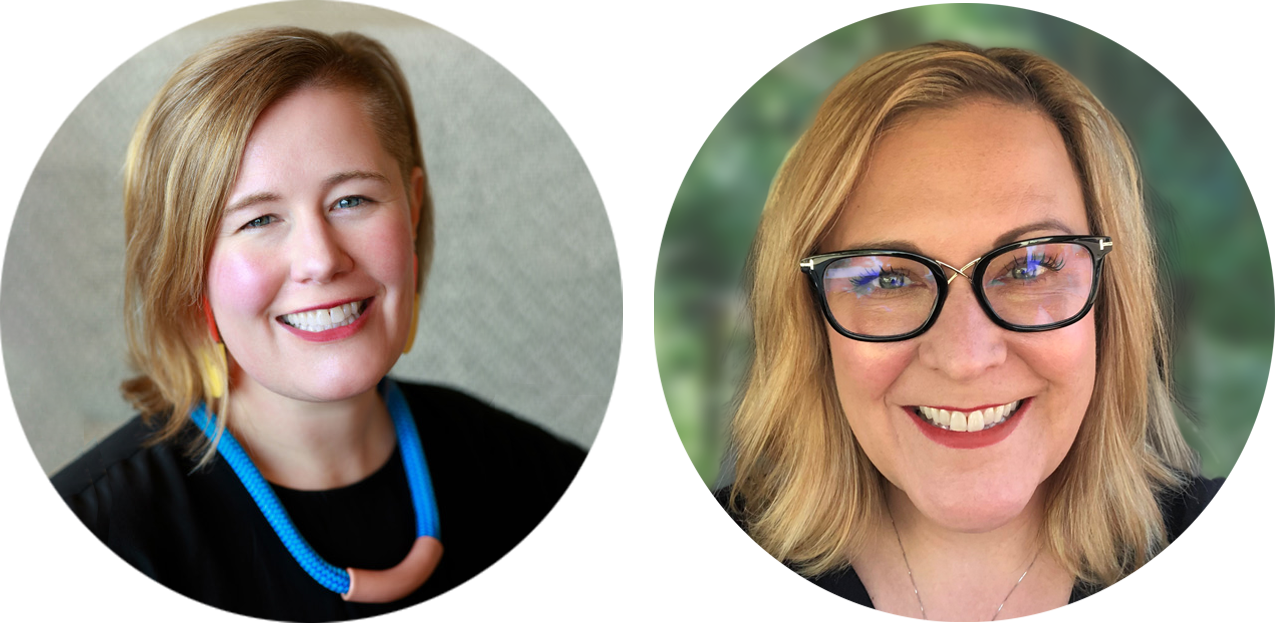
We want to convey in this article not only terms and definitions but insight into how these rituals and framework can be adapted for modern interaction. We share these insights from our two separate, diverse backgrounds, as well as our religious practice at two different levels of observance.
doula Profile
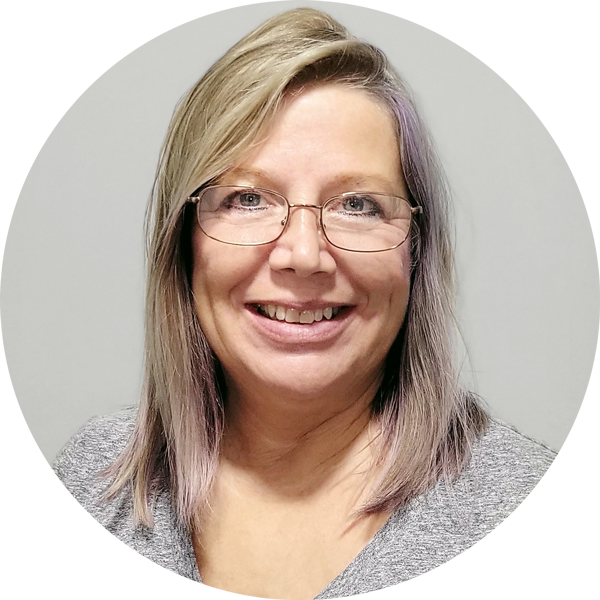
Sheila Burke
Sheila Burke is an end-of-life doula located in northeast Ohio. She is an advocate for choice at the end of life, including dying at home, hospice, and home funerals. Sheila is an Amazon Kindle best-selling author who has seen several of her books hit No. 1, including Bullshit to Butterflies, her memoir of her husband’s cancer journey, hospice, and death. She loves nature and is considered her neighborhood’s “Snow White,” as she tends to wild deer.
Q&A with Sheila
When and why did you decide to become an end-of-life doula?
In the late fall of 2019, my husband of 30 years, Shane, was diagnosed with an aggressive form of lung cancer. He was 55 years old. Chemo and radiation bought him a little time to do things he wanted to do as well as to spend time with friends and family. Unfortunately, shortly after he was diagnosed we were also in a worldwide pandemic that restricted everything.
Ritual is action and idea; it is art and discipline. Done individually or in community, performing a ritual can play an essential role in acknowledging life and honoring moments of importance. In this workshop, Dr. Jamie Eaddy Chism will guide participants in learning to develop rituals for helping themselves and others navigate transitions and honor life. REGISTER HERE
Everyone should have access to end-of-life care options that meet their needs. Recognizing and addressing our biases and learning about the unique and unparalleled experiences of those whose needs have been disregarded is critical to developing cultural humility. Learn how to be a culturally conscious caregiver. This class meets for three nights for three hours each session.REGISTER HERE
MEDIA OF THE MONTH
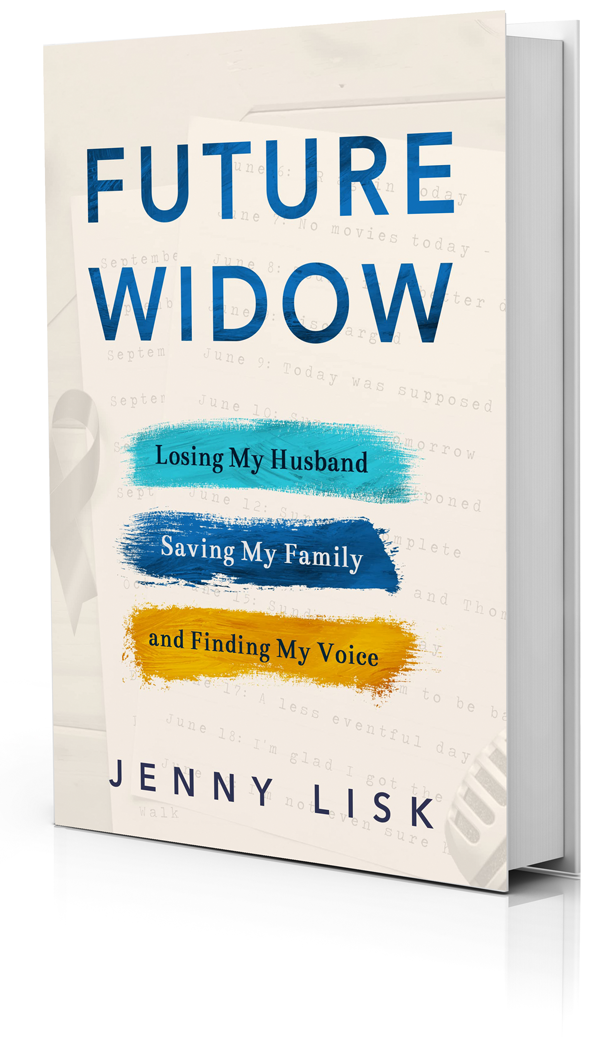
Future Widow: Losing My Husband, Saving My Family, and Finding My Voice
by Jenny Lisk, Bluhen Books (2021)
Jenny Lisk is an award-winning author and widowed mom who is dedicated to helping widowed parents increase their family’s well-being. In her book Future Widow: Losing My Husband, Saving My Family, and Finding My Voice, Jenny draws on her experience to provide a real-life guide for surviving and thriving while raising grieving children. To write this book, Jenny drew from her CaringBridge journal, written from May 2015 to April 2016, and from her memory of events.READ EXCERPT
A GUIDE TO LEARNING WITH INELDA
by Douglas Simpson
As the field of end-of-life doula work is expanding, so are INELDA’s offerings. In order to meet the demand and interest of those choosing to learn with INELDA, we have grown our education options over the past six months. We hope to highlight the current programming and give you a sense of how we designed the learning areas to best meet your needs.
Just as various end-of-life doula trainings offer different approaches to learning, approaches that are sometimes learner specific, we applied this philosophy to the certification process. It is uniform and all requirements are the same, but it is also learner specific. How one meets the requirements may vary.
INELDA, Groundspark, and Citizen Film continue their ongoing partnership with new fall screenings and panels at nationwide film festivals. PROGNOSIS: notes on living was Oscar-winning documentarian and LGBTQIA2S+ activist Debra Chasnoff’s response to her diagnosis of a deadly disease as she turned the camera on herself and her loved ones. This film is used in our trainings and has become an important tool for understanding issues and feelings raised at end of life. This fall INELDA-trained educators and filmmakers will partner on panels to further share this valuable movie. Join us for an upcoming panel discussion or screening if you haven’t seen Prognosis yet!FIND AN EVENT
IN THE NEWS
This month INELDA director of program development Dr. Jamie Eaddy Chism was featured in an article on Vox, “End-of-life planning with loved ones can be hard. Here’s where to start.”
INELDA cofounder Janie Rakow appeared in the Fox 5 nightly news report “Death doulas provide end-of-life support for families.”
Program development director Dr. Jamie Eaddy Chism appeared on Instagram Live with The Jacque Reid Experience on September 29.
We’ve invited INELDA educators, both those new to and more experienced within the organization, for a group conversation. In this webinar we will introduce our newest educators, who will share the work that led them to become practicing doulas and instructors.
Learn about the experiences they bring to their teaching, including veteran support, full-spectrum doula work, mental health understanding, and more. Hear their insights and participate in an open dialogue and Q&A, moderated by INELDA director of program development, Dr. Jamie Eaddy Chism. This webinar is open to all.
Cost: Free with INELDA membership & non-members
PRACTICE CORNER
TOOLBOX TIPS
For those who may have a challenging time when a client has visitors, I would suggest assessing the client’s needs. The doula role in these scenarios could be one of a gatekeeper, prepping the visitor for what the client would like to be met with that day. The doula could take a different role should a visitor arrive during scheduled time, such as tidying the space or offering to make tea if that seems appropriate. The client might want privacy with visitors, and it’s OK to ask and excuse yourself.
Themes or topics could come up in conversation with a visitor that might be worth exploring deeper when the doula returns to one-on-one time with clients. Did it go how they hoped? Maybe they need suggestions on how to get what they want from their interactions with visitors. Do they engage in small talk to appease those who are uncomfortable with their nearing death, when what they really desire is deep, authentic connection? Find out how they felt in their interaction with their visitor. If the surroundings get a little raucous, a doula could suggest diplomatically that the client might benefit if the energy were to be brought back down. My mother’s hospice nurse did this by having my four energetic siblings and me visit our mom individually once she was actively dying, knowing my mother would likely have an easier time leaving her body if we shifted gears. I’m willing to bet there is a lot of valuable information in observing our clients with their visitors. —Lauren Butler
SHARING SOURCES
The Tilly Project
The Tilly Project aims to connect pet owners with end-of-life pet photographers across the world, and to provide accessible, educational, and supportive resources for photography, anticipatory grief, and pet loss and bereavement.
The site was founded in 2021 by Lauren Kennedy, who has a background in photography and animal rescue work and is employed at the Saco River Wildlife Center as the director of development.
In the spring of last year, a friend reached out to Lauren, knowing that she might have some resources on where to find a pet urn. Their conversation led to Lauren offering free end-of-life pet photography for the family whose pet was dying.
ASK INELDA
Can you speak to the phenomena of “rallying” and when that may typically occur? —September training participant
Educator Shelby Kirillin: This is called terminal lucidity, and it normally occurs very close to someone’s death. While terminal lucidly is not overly common, it can present itself in the last few days of someone’s life. It presents itself as a wakefulness or sudden mental clarity that wasn’t present before. This can happen when someone has been noncommunicative or might not have eaten for many days. They may start grunting and then all of a sudden sit up and start communicating. They’ll start talking. I had one individual who just walked into the kitchen and asked for a doughnut. READ MORE
Life is a good teacher and a good friend. Things are always in transition, if we could only realize it. Nothing ever sums itself up in the way that we like to dream about. The off-center, in-between state is an ideal situation, a situation in which we don’t get caught and we can open our hearts and minds beyond limit. It’s a very tender, nonaggressive, open-ended state of affairs.
To stay with that shakiness—to stay with a broken heart, with a rumbling stomach, with the feeling of hopelessness and wanting to get revenge—that is the path of true awakening. Sticking with that uncertainty, getting the knack of relaxing in the midst of chaos, learning not to panic—this is the spiritual path. Getting the knack of catching ourselves, is the path of the warrior.
by Pema Chödrön
News Briefs
Dire Global Nursing Shortage
According to ABC News, the U.S. nursing shortage may reach over 1 million people by the end of the year. After a long pandemic, low compensation, and being forced to work extended hours, nurses are burning out. The article reports that 1 in 5 nurses left the profession during the pandemic and over 50% of the registered nurses are currently over 55 years of age.READ MORE
Death Prediction Model for Those Living With Dementia
A team of researchers led by University of California, San Francisco examined the accuracy of a model predicting time until death for community-dwelling older adults with dementia. The study, as reported in JAMA Internal Medicine, was conducted on two cohorts totaling 6,671 individuals from 1998 to 2016 and 2011 to 2019.READ MORE
California Legalizes Human Composting
California joins Washington, Oregon, Colorado, and Vermont in allowing residents to compost human remains after death. The California law will go into effect in 2027. The process, also known as natural organic reduction, requires the corpse to be placed in a steel container with organic material until what remains is about a cubic yard of human compost, a process that usually takes between two and six weeks.READ MORE