
Home > Resources > A Death Doula’s Guide to a Meaningful End
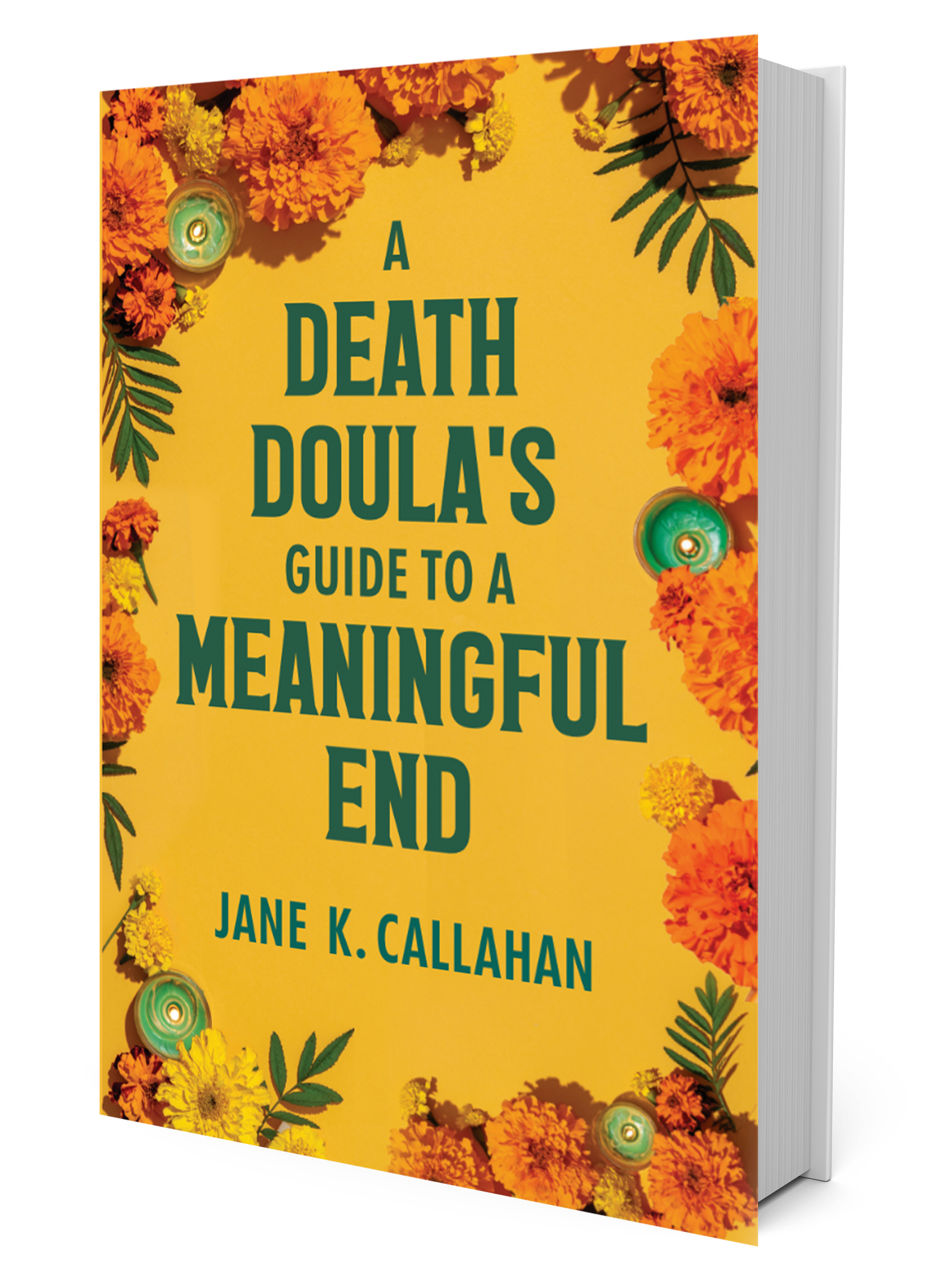
A Death Doula’s Guide to a Meaningful End
By Jane K. Callahan
Jane K. Callahan, author of A Death Doula’s Guide to a Meaningful End was trained as an end-of-life doula through INELDA and earned a professional certificate as an end-of-life doula from the University of Vermont’s Larner College of Medicine. She is also a member and proficiency badge holder of the National End-of-Life Doula Alliance. Jane serves Transitions Hospice and sits on the board of directors for the Funeral Consumers Alliance North Carolina. She hosts educational sessions about end-of-life matters at venues in Durham, Chapel Hill, and Cary, and has cultivated a community of fellow doulas and death workers in the Triangle area.
Excerpt
In the late afternoon in early December, I got a call from an unknown number.
“I hope you don’t mind, one of the nurses gave me your card. We’re kind of in an emergency situation,” a frantic woman on the other end blurted out. I asked her to tell me what was happening.
“Mom and Dad came up from Louisiana for a scan—she has brain cancer and the best doctor is here. Well, they found a brain bleed and they said she has maybe days left. They are trying to buy time with steroids so family can come up, but, like, I can’t believe this is happening and I don’t know what to do!” She burst out crying while apologizing. Her mother was in the process of being transferred to an inpatient hospice—she would die hundreds of miles away from home. I said I’d meet them there later that evening.
The family was gigantic: seven adult children and a domineering father steeped in denial. It was clear that the dying woman was a powerhouse matriarch, the glue that held the family together. Despite being told that her condition was terminal, and despite already having lived well past her original prognosis, nobody had really believed this was going to kill her. The doctors, the family said, remained optimistic despite the fact that nobody beats this type of brain cancer. “We all thought she’d be the first person to do it,” one of the sons said. “I mean, why not, right?”
We gathered at a room in the hospice reserved for things like family meetings, and I started a conversation that would help the family determine how to say goodbye. The daughter had warned me that there was some denial in the family, and so I spoke directly: We are here in hospice today because your mother is going to die soon, and now is your chance to think about final words. I gave them each a sheet of paper and a pen and I provided prompts: What first comes to mind in what they want to say? Are there things they want to apologize for, or are there urges to ask for forgiveness? What do they want to tell her about how she changed their lives? What are their best memories they can share with her? I told them the phrases that can help dying people let go peacefully: I love you, I will miss you, you can go, I will be OK.
The room fell silent and heavy after I shared these words. Then the father said, “Well, she’ll bounce back from this. I’m sure of it,” he bellowed. “The doctors never said for sure that this was it. So I don’t feel we need to do this quite yet.”
She died two days later, and if they ever got to say goodbye, I’ll never know.
Excerpt from A Death Doula’s Guide to a Meaningful End by Jane K. Callahan reprinted with permission from Chicago Review Press. Copyright © 2026.
Posted 3/26/2026