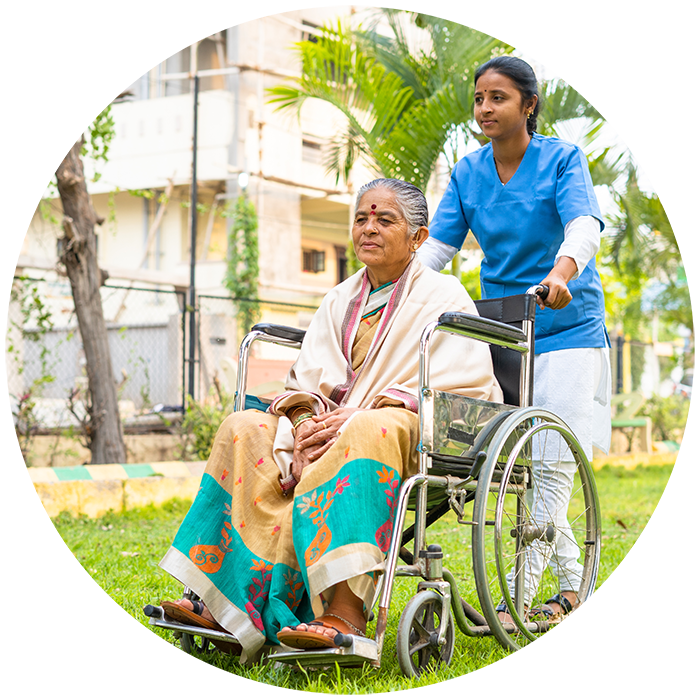
The gap between theory and practice in palliative care systems came into sharp focus in a study recently published in Palliative Care and Social Practice. Surveying 43,000 people in the Indian state of Delhi, researchers found that despite two in every 1,000 people needing home-based palliative care, not one of the qualifying families had ever heard of these services—even when the nearest facility was half a kilometer away on average.
The result: patient pain, debt (one in three affected families reported debt averaging 180,000 rupees, or slightly more than $2,000 United States dollars), and a disproportionate burden on the region’s women, who comprised 84% of the primary caregivers in the survey. While resources are often strained, the study suggests that the larger problem is a lack of integrated care.
“Despite a national programme and health policies, families had never even heard of palliative care,” lead author Dr. Parth Sharma of Maulana Azad Medical College told The Hindu. “Proximity to a centre does not mean access. Our system is still designed for infrastructure-based care, not community-based support.”
Some states have made more progress than Delhi. The southern state of Kerala is known for home-based, nurse-led teams, which the study authors urge Delhi to follow in order to close the care gap.
Body Disposal Begins to Tilt Green
With eco-conscious baby boomers becoming the prime users of burial services, green burials are on the rise—but still account for a minority of body disposals in the United States.
“If you nursed your babies and you recycle the cardboard in the toilet paper roll, this is going to appeal to you,” Lee Webster, former president of Green Burial Council, told KFF Health News. When Webster began tracking operations that offered green or natural burials in 1998, her list featured just one outfit. Today, that list has grown to 497.
Cremation is still the nation’s leading method of disposal, in part because of its cost point, which is lower than a conventional burial. Though prices vary, green burials are generally more economical than conventional burials as well. At Larkspur Conservation outside Nashville, Tennessee, which partners with The Nature Conservancy to preserve land trusts, a green burial costs around $4,000, with most services included.
According to the National Funeral Directors Association, interest in alternative body disposal is growing, though uptake lags far behind. Fewer than 10% of people polled would outright prefer a green burial, but more than 60% report interest in exploring alternatives, including green burials.
Federal Geriatrics Training Support Comes Through
Amid cuts to federal health care systems, one 10-year-old program has been able to maintain its funding: the Geriatrics Workforce Enhancement Program (GWEP). Aiming to address the shortfall of geriatricians with specialized knowledge about treating older adults, GWEP trains roughly 70,000 clinicians in the care of older adults.
Student doctors, community health workers, mental health care providers, and others in the health care system are trained using GWEP funds to tend to the needs of older adults—critical to keep up with the pace of growth among adults over 65. There are currently 6,580 practicing geriatricians, according to the Department of Health and Human Services, and that number is expected to go down. Though geriatricians report high job satisfaction, pay in the field is relatively low, discouraging emerging medical talent from pursuing it as a specialty.
In July, GWEP’s future seemed unsure, as the grant-based program initially disbursed 34% less in funds than was expected ($27.5 million in total, down from the anticipated $41.8 million), leading program directors at the universities and hospitals that use these funds to speculate about how to proceed with shortfalls of millions.
But in September, the full funding was restored. As depicted in The New York Times, this turnabout may be in part thanks to the efforts of Senator Susan Collins, the Maine Republican who referred to the program on the Senate floor as a “modest investment that will help ensure that our older Americans have the expert care that they need, that their caregivers are provided with training, that other support employees and health care providers receive the skills they need.”