The jumble of end-of-life documents can be stressful for loved ones to handle even with doula support—and Congress may be taking action to help. The bipartisan Legacy Act, introduced in October, would support Medicare-certified health care providers in working with a centralized depository of documents that would help patients, families, and providers preserve patient autonomy and honor choices at and for end of life.
“This is about clarity, compassion, and common sense in health care,” said Rep. Tom Suozzi, a Democrat from New York and one of the representatives sponsoring the act, along with North Carolina Republican Dr. Greg Murphy. “Every person deserves the peace of mind that their voice will be heard, and their decisions respected.”
End-of-life documents such as advance care directives and medical proxy forms help inform deathcare—but only when they are known and can be located and verified. If enacted, the bill would make it easier for providers to access these documents and issue appropriate care. The end-of-life industry largely endorses the bill, including players such as the National Partnership for Healthcare and Hospice Innovation and the Coalition to Transform Advanced Care (C-TAC).
Obituary Study Reveals Social Shifts
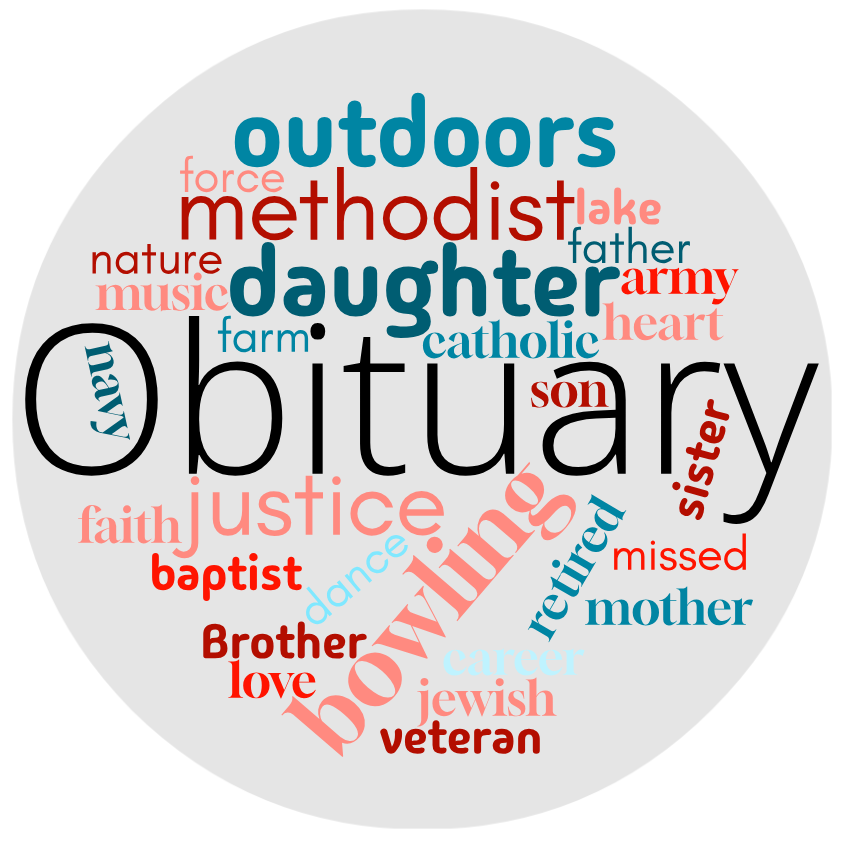
When paying tribute to the deceased in an obituary, we’re documenting not only an individual life but the social values of contemporary society. That’s the takeaway from a study recently published in OMEGA–Journal of Death and Dying of nearly 40,000 United States obituaries.
Obituary analysis isn’t new, but the existing research on obituaries tends to focus on celebrity tributes or obituaries of specific subgroups of people, such as athletes and academics. For this study, researchers collected 39,449 obituaries from Legacy.com, usually written by nonprofessionals. They then ran the text through a computerized neural network that detected keywords and underlying themes and used the findings to establish statistical associations across these terms. The team found that obituaries focused on five key areas: family relationships, personal achievements, hobbies and leisure, religion and logistics surrounding death and funerals, and morality and life values.
Examining the written legacies of ordinary citizens can reveal how we shape public memory. “Through their interaction with the master narrative, individual obituaries have come to represent more than personal stories—they reflect what a society collectively idealizes at a given moment,” the authors write.
Hope for Frontotemporal Dementia
Delivering “positive topline results” in preventing dementia, a new drug targeting a protein related to dementia has passed a major safety hurdle, taking it one step closer to becoming available to the public.
As showcased in Science Alert, the drug targets people with increased genetic risk of frontotemporal dementia (FTD), which is the most prevalent form of dementia in people under 60. Over its three-month trial, VES001 increased levels of progranulin, a protein that plays a critical role in neurodegenerative disease, by more than 95% compared with baseline results. Neither the control population nor the target population of people at genetic risk for FTD reported serious side effects.
“This means we now have hope for a treatment that could potentially prevent the development of this form of dementia in people at genetic risk—thereby conceptually transforming the future of dementia therapy,” said Anders Nykjær, the chief scientific officer of Vesper Bio, the developer behind VES001.
FTD affects between 50,000 and 60,000 Americans, and its average age of diagnosis is 60—a full decade before the average diagnosis of people with Alzheimer’s disease, according to The Association for Frontotemporal Degeneration.
For instance, today’s obituaries tend to mention higher education more than the death notices of the past, indicating the rise in the attainment of higher education. Researchers also found that in contrast to obituaries from past eras, obituaries trend toward emphasizing personal accomplishments and personality traits over public virtues—for example, mentioning humor over public virtues.