Beyond Legacy: Supporting Voice and Agency at the End of Life
|
Her often-shaky hand did not tremble as she held the pen to paper. A laser beam of afternoon sunlight streamed across her face through the nearly closed bedroom curtains. The rare neuralgia on her left side—what she described as “buzzy like swarm of bees” under her skin—was a steady presence that day. Yet she focused fully on the task before her. With great intention, she signed her full birth name—each letter slow, deliberate, unmistakably hers. When she finished, she exhaled a deep, satisfied sigh, a sound that carried accomplishment, relief, and quiet pride.
My mother had just voted in the 2024 presidential election.
|
Precious Jackson is originally from Chicago, but is now based in Florida.
|
Q&A WITH PRECIOUS JACKSON
|
When and why did you decided to become and end-of-life doula?
|
I started working in the health care field when 9/11 happened. I was a single mother of two children and was laid off from the airport. My cousin who was a nurse told me to get my CNA license, and it changed my life around. I worked in the ER, ICU, SCPU, oncology, burn unit. I tried other places, but I wanted to really take care of people. So I did home health, which sent me into different homes with different types of patients. This is when I was introduced to hospice.
|
BRIDGE END-OF-LIFE DOULA TRAINING
|
December 6, 2025
Saturday, 10am – 7pm ET
|
Location: ZOOM
Educator: Marady Duran
Price: $475 (discounts available for members, students & military)
|
IMMERSIVE END-OF-LIFE DOULA TRAINING
|
December 11, 2025-December 14, 2025
Thu/Fri 6pm – 10pm ET & Sat/Sun 10am – 7pm ET
|
Location: ZOOM
Educator: Wilka Roig
Price: $895 (discounts available for members, students & military)
|
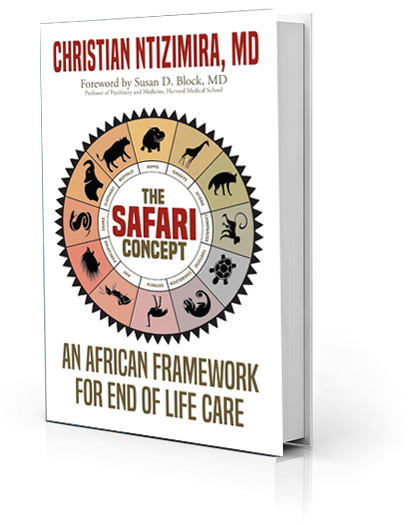
The Safari Concept: An African Framework on End-of-Life Care
|
By Dr. Christian Ntizimira
|
The Safari Concept is a groundbreaking approach to palliative care that transcends cultural and linguistic barriers. By recognizing the importance of family and community in African cultures, the concept invites those around the dying person to participate with medical caregivers in decision-making and care, as they have for millennia. Using animal archetypes as metaphors, the concept provides a powerful framework for characterizing patterns of a family’s suffering and identifying the health care team’s most effective responses for addressing their physical, emotional, and spiritual needs. Dr. Christian Ntizimira’s book, The Safari Concept: An African Framework on End-of-Life Care (Batinya Publishing, 2023), shares how this can come to life.
|
The Art of Setting Boundaries: Working With Families at the End of Life
|
by Marady Duran, LMSW, MATD
|
Throughout my years of practice as both an educator with INELDA and a clinician serving individuals and families at the end of life, one recurring question consistently arises: “How do you establish and maintain healthy boundaries with the families you serve?”
This is a profound question—one that speaks to the very heart of compassionate caregiving. Boundaries are not barriers; they are structures that allow both practitioner and family to engage authentically, safely, and sustainably. Over the years, I have reflected deeply on this topic and gathered lessons from both personal experience and the shared wisdom of colleagues and learners in this field.
|
SAGECare and INELDA to Offer Inclusive Deathcare Training
|
INELDA and SAGECare are thrilled to announce a new capacity-building training initiative to integrate deeper competencies and skillfulness for LGBTQ+ older adults navigating deathcare and end of life. This new model immerses learners in the experiences of LGBTQ+ older adults, exploring cultural history, inclusive language, case studies, legal considerations, and more. Through guided learning and practical skill-building, participants gain the knowledge necessary to offer meaningful companionship, affirm identity, and advocate for dignity at every stage.
|
INELDA’s Decade of Doulas: RSVP for Live Stream Event
|
On the evening of Tuesday, December 9, from 6:30-8:30pm ET, INELDA will be live streaming our 10-year anniversary event. This celebratory, hybrid gathering will include an awards ceremony, a short film, a lively panel discussion, some exciting news to share, and being together in community. More details coming to your email inbox soon. Can’t wait to celebrate with you!
|
Join INELDA and our friends at the National Health Care for the Homeless for Homeless Persons’ Memorial Day on December 18. At these annual events (most often in person), people gather to remember those who have died unhoused and come together in community to strengthen one’s commitment to continue to work for a world where no life is lived or lost in homelessness. INELDA will join with others in scores of communities across our nation, stating that no person should die for lack of housing. This virtual event will be held from 12 p.m. to 1 p.m. ET.
|
Theater Opportunity for BIPOC Community in Los Angeles
|
Our friends at PAUSE have partnered with Geffen Playhouse’s Lights Up program and Center Theatre Group’s In the House program, which each provide complimentary theater tickets for over 1,000 community members in the greater Los Angeles area. Through these programs, PAUSE is able to provide theater tickets for members of our network who identify as BIPOC, and we’d love to extend this offer to the INELDA community. If you’re in the Los Angeles area and are interested in joining, please go to the website for more info and to fill out the interest form, or feel free to reach out directly to their events manager, Shante.
|
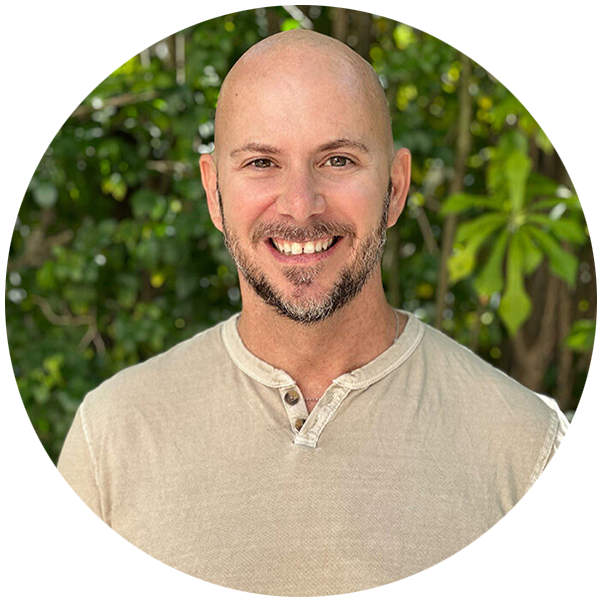
Adrian Molina Joins INELDA as Educator Assistant
|
Adrian Molina is a writer, trauma-informed coach, yoga teacher, and end-of-life doula based in Miami Beach. For more than two decades he has worked with trauma-affected communities and first responders in hospitals, shelters, prisons, and hospices. Originally from Buenos Aires, he began his journey teaching yoga in New York City before moving into trauma recovery work. Adrian’s practice is rooted in the belief that healing arises from both professional knowledge and lived experience. Outside of his work, he finds peace by the ocean, on his bike, and in quiet moments of writing.
|
The Implications of Holding Life
|
November 19 | WED 7 – 8:30pm ET
|
This November, we will be starting a three-part series on child loss. The first webinar welcomes Marquita Straus—founder of Imani’s Light Grief & Wellness Care, end-of-life doula, bereaved mother, and perinatal grief and trauma therapist. We will discuss the implications of holding life, the experience of the death of a child, and how we as end-of-life doulas can support this unique grief and normalize these experiences. Marquita will be joined by INELDA educators Nzinga Abdullah Aziz, Greg Hedler and Omni Kitts Ferrara, who each carry their own experience in the space. The other two child loss webinars will be held in 2026.
|
Marquita has over 15 years of serving BIPOC perinatal families. She has served as a full-spectrum doula (birth, postpartum, and bereavement), breastfeeding peer counselor, childbirth educator, and perinatal bereavement group facilitator, and is a trained midwife. She aims to inspire and empower people to show up authentically while fiercely advocating for those navigating spaces that are not traditionally occupied by people of color.
|
*Please note that this webinar is the first of a three part series on child loss. We will be presenting the other two webinars in 2026.
|
**Due to the Thanksgiving holiday, November’s webinar will be held on Wednesday, November 19th, as opposed to the final Wednesday of the month.
|
Cost: Free with INELDA Tier 2 & 3 Membership | Tier 1 and Non-members $15
|
“When talking to kids about taking family members off of life support, use biologically correct information. It’s an instinct to try to protect kids from pain, but in our well-intentioned efforts to do so, we end up causing complicated relationships with death as they age. It’s also imperative to understand that as kids’ brains continue to develop and understand complex systems with more nuance, they will experience acute grief each time they reach a new level of understanding. Consider the below progression as a model.
|
-
Without the machine’s help, your dad’s body will not breathe.
-
After life support is removed, your dad’s lungs will stop bringing air/oxygen into his body.
-
His heart will stop pumping blood.
-
Without blood and oxygen, your dad’s other organs, like the stomach, kidney, liver, and brain will stop functioning.
-
When all these systems are no longer working, your dad will be dead.
|
Don’t push them for a response; follow their lead. If they want to have space and be alone, ensure safety but respect it. If they share thoughts, don’t fix or correct or judge; reflect. Validate. Do some research on support groups for kids in their area and provide them to their caregivers.”
—Beth Wise
|
Solace is a network of patient advocates throughout the United States. A patient advocate is someone who has spent years in health care and takes on the toughest parts of the system. They’ll find doctors, keep providers coordinated, handle insurance, and do whatever it takes to get you the care you need.
|
Patient advocates help patients focus on healing by breaking down barriers and providing critical support throughout the American health care system. A patient advocate does whatever they need to guide you through the health care system and help you receive top-notch care. The scope of their work is remarkably broad, addressing both clinical and non-clinical barriers that can prevent you from getting the care you need.
|
How do you respond to the ranges of grief, from those comfortable and others stoic, in the dying person’s room or at the funeral?
—Webinar Attendee
|
Webinar guest J.S. Park: “This is a phenomenon in group dynamics called asynchronous grief, in which different people in the room will experience and express grief differently. When you visit a patient, it’s not just them alone—it’s all the voices that they carry, all their ancestors, all their history, all the connections that they have in their life. You never visit a person alone. It’s everyone that they carry, even if they’re not in the room. So, when you go to a room and it’s crowded, everyone is going to be in a different place. Some people are going to be overly positive; some people are going to be subdued and silent and in a corner, shut off.
|
Soup Sundays: The Seasonal Rhythm of Self-Care
|
As the seasons change, I’ve been reflecting on the pace of my days and how it compares to the rhythms of nature. In the northern hemisphere, the days are growing shorter, and trees are shedding what they no longer need. Where I live in the desert, brilliant leaves aren’t around every corner, but the air has finally begun to cool. With these cues, my body is noticing a clear message: Slow down.
–Lily Hood
|
Self-Selected Music Boosts Pain Relief, Research Shows
|
Laughter may be known as the best medicine, but music is vying for the title. Recent studies have delved into the ways music supports pain reduction, with promising results. One study published in Nature shows that patients’ self-selected music heightened pain tolerance regardless of genre, and another study published in Pain reports that when people listened to music tailored to their personal tempo, pain levels diminished.
|
The “Hierarchy” of Pregnancy Loss
|
While the phrase “end of life” often implies the end of an adult life, pregnancy loss can be tended to by end-of-life doulas as well. A paper published in OMEGA–Journal of Death and Dying examines how pregnancy loss falls into the idea of “hierarchies of loss”—that is, loss that is widely acknowledged versus loss that doesn’t carry the same weight of social legitimacy.
|
Structured Support Helps With Cognitive Interventions
|
The advice may not be revolutionary, but the stakes are high enough that it may be worth repeating: Lifestyle factors can help ward off dementia, or make people more vulnerable to it. A new study published in JAMA sheds some new light in this area, demonstrating that structured, high-intensity lifestyle interventions are more effective at staving off cognitive decline than self-guided, low-intensity interventions.
|
Someone famous will die that day,
My day,
And the newspaper will report:
“More obituaries on page 24.”
For the curiosity of some,
The regret of several,
And the grief of a few.
Those few, they matter,
So they have a nice walk
In the Marin headlands
shadowed by a weary and worn mountain
(still green! still fragrant!
with pine and transplanted eucalyptus,
and most important: Still there!),
Where I’m proud that the few gather trash,
But drop my ashes downwind,
And remember as I fly away.
|
Support Accessible, Equitable, and Compassionate Deathcare
DONATE HERE
|
© INELDA 2025 International End of Life Doula Association is a
501(c)(3) tax-exempt nonprofit organization that relies on public support to do it’s work.
Tax ID#: 47-3023741
Phone: 201-540-9049
[Account Login]
|
|